Rosh Hashanah Sermon
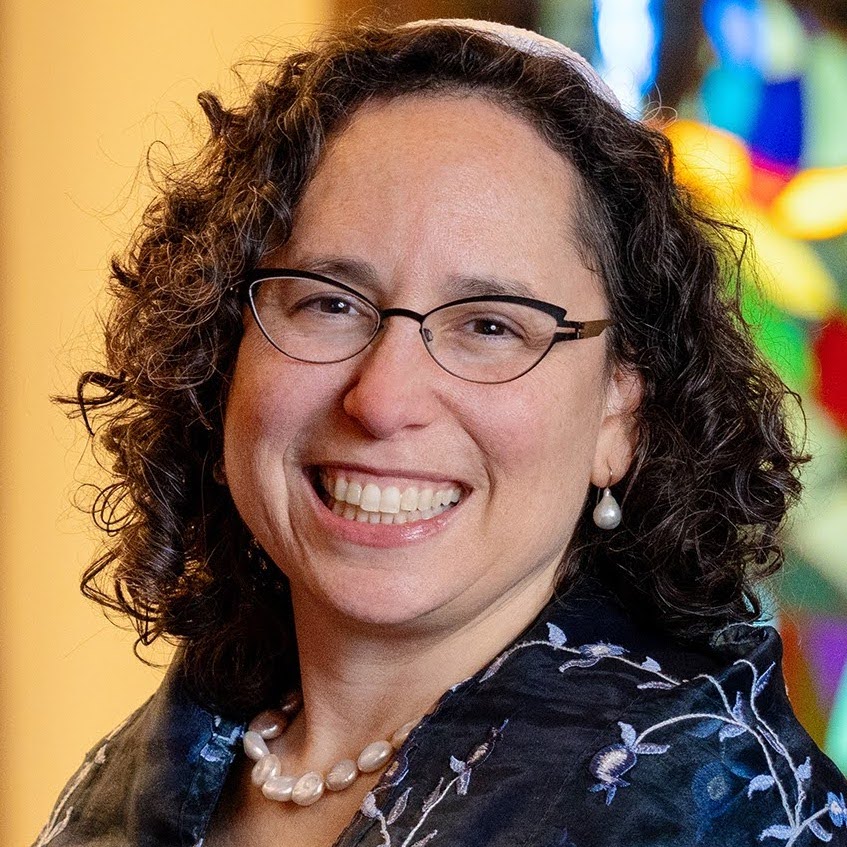
Rabbi Julie’s sermon for Rosh Hashanah 5787/2026, “Find Your Why”
I want to welcome you to the world’s largest book club, along with the poet Mary Oliver, former hostage Or Levy, leadership expert Simon Sinek, Holocaust survivor Victor Frankl, country music star Dolly Parton, and my mother and father. Hersh Goldberg, who was kidnapped from the Nova music festival on October 7th and executed after 328 days as a hostage in Gaza, chose the book for us. His mother, Rachel Goldberg-Polin, inspired me to take Viktor Frankl’s Man’s Search for Meaning off my bookshelf and finally read it for the first time. In her words, this book club is “different from all the others. Because this one invites participants from This World and The World to Come.”[1] All are here – those who are living and those who we’ve lost; all of their voices adding to this gathering. Mary Oliver’s collection of poems sits on my nightstand, but this is my first time meeting her. She opens our discussion: “Tell me, what is it you plan to do with your one wild and precious life?” [2]
* * *
Along with 22 million viewers, I first watched Simon Sinek’s TED talk on ‘starting with why’ in preparation for a meeting with the Princeton Hillel student board. This next part might be shocking – our goal was to boost attendance at Shabbat dinner. “Why is Apple so Innovative? Why did Martin Luther King lead the Civil Rights Movement? And “Why did the Wright Brothers invent the first successful airplane?”, I asked. Not because they were smarter or had more resources. In fact, according to Sinek, inspiring leaders think, act, and communicate just like everyone else. But the key is that they do everything in the opposite order, starting not with what or how, but why. Apple’s purpose is to ‘Think differently.’ Martin Luther King led with beliefs and dreams rather than plans. And Orville and Wilbur Wright got out of bed every morning with enough spare parts for at least 5 crashes before dinner because they believed their flying machine would change the course of the world. After reiterating Sinek’s pitch for starting with why, we brainstormed with each other the deeper purpose of Shabbat dinner. I was so moved by what the Hillel leaders said that I saved their handwritten notes for all these years. And those college students inspired their friends to come to Shabbat dinner not only to recharge and find community, but also because of a larger why – “to hold the Jewish people together and to welcome God into their lives”[3].
* * *
In 1941, Viktor Frankl, already a renowned psychotherapist, was offered a visa to immigrate from Austria to America. His parents were overjoyed, but he hesitated to leave them alone to face their fate. It was then that he noticed a piece of marble lying on a table that his father had brought home from the ruins of the largest synagogue in Vienna, which had been burned down by the Nazis. One gilded letter from one of the Ten Commandments remained. He asked his father, “Which one is it?” and when he answered, “Honor thy father and mother,” Frankl let his American visa lapse.
As a result of this choice, Viktor Frankl would spend three years in four different concentration camps, the sole survivor in his family. When he arrived in Auschwitz, Frankl was stripped of his coat, which contained, hidden in its pocket, the manuscript of his life’s work. He inherited the worn-out rags of another inmate. “Instead of the many pages of [his] manuscript, [he] found in a pocket of the newly acquired coat one single page torn out of a Hebrew prayer book, containing the [words] Shema Yisrael. Frankl interpreted this ‘coincidence’ as a challenge to live [his] thoughts instead of merely putting them on paper.”[4]
His experiences in Auschwitz, as horrific as they were, gave Frankl the chance to test his theory that “life is not primarily a quest for pleasure, as Sigmund Freud believed, or a quest for power, as Alfred Adler taught, but a quest for meaning.” Frankl saw firsthand that the inmates who “gave up on life, who lost hope for the future, were inevitably the first to die”… By contrast, Frankl kept himself alive by focusing on his why – the prospect of seeing his wife again and his dream of lecturing after the war about the psychological lessons to be learned from life in the concentration camps.[5]
* * *
Hersh Goldberg, like his mother, “had to read every night before he went to bed”. Rachel recounts, “he had left his book on his nightstand. The Art of Happiness by the Dalai Lama.”[6] In his heart, into the tunnels, Hersh carried another book, Viktor Frankl’s Man’s Search for Meaning.
Or Levy, who was captured from the Nova Festival alongside Hersh, asked to meet with Hersh’s parents, soon after his release. He told Rachel and Jon that Hersh repeated [a] specific line of wisdom to everyone in the tunnel. “What is your WHY?” [Hersh] kept asking over and over. They talked about their individual reasons to live. Reminding themselves that if they could identify their purpose for being in This World, then each of them would have the motivation to find a way to survive. Or knew his WHY was his son.”
Or vowed to Rachel and Jon from the hospital that as soon as he regained his strength, he planned to tattoo the mantra “he who has a why can bear any how” on his arm. When Or’s son first saw the tattoo, he asked, “[Aba], what is that?” and Or answered, “It’s you.”[7]
* * *
Hersh’s mother, Rachel, always travels with her copy of Man’s Search for Meaning. She understands that it’s not only meant to be a Holocaust memoir or a guide to surviving the most extreme suffering imaginable. Rather, the book’s gift is its challenge to each person to find meaning in their life. Frankl teaches that “forces beyond your control can take away everything you possess except one thing, your freedom to choose how you will respond.”[8] And according to Frankl, we can discover the meaning in life in three different ways: through our contributions to this world, through our relationships, and through our ability to respond to unavoidable suffering with courage and humanity.[9] This past year, I watched my own mother make meaning in these same three ways when she was dying of cancer. She shared the story of her career helping children at risk with her grandchildren from her hospital room; she made a heroic return to Cleveland to say goodbye to lifelong friends and family, and she thanked her oncologist for keeping her alive to celebrate her granddaughter’s Bat Mitzvah, her grandson’s wedding, and the birth of her third great-grandchild.
* * *
You might find yourself wondering why I invited “one of the most successful country music performers in history”[10] to our book club discussion today. I don’t know if Dolly Parton ever read Man’s Search for Meaning, but I sure do know she found her WHY. The day after she graduated from high school, she moved to Nashville to become a country music star. She wouldn’t allow the laughter of her classmates to hold her back from her dream. And on her first day in the city, she met her husband Carl Dean at the “Wishy Washy” laundromat. She responded to the challenges of growing up dirt poor, in a one-room cabin, with an illiterate father and a mother who sewed her a coat of many colors out of rags, by encouraging hundreds of thousands of kids to “dream more, learn more, and care more.”
Her Buddy Program in Sevier County, Tennessee, promised middle school students a $500 reward if they paired with a friend and pledged to graduate high school. As a result of her vision and generosity, the high school dropout rate in her hometown fell from 35% to 6%. And to honor her father, who never learned to read, Dolly started the Imagination Library, sending a book per month to poor, rural children in Tennessee from birth until kindergarten. In her lifetime, Dolly Parton gifted more than 100 million books to children. This program inspired Harold Grinspoon to launch PJ Library, which sends free Jewish storybooks to Jewish children living in 40 countries around the world.
* * *
He’s been so quiet, you might have almost forgotten that my father is also a part of this book club. It’s his first time at a book club meeting; the only books he read regularly were the Torah and the Talmud. Not so much because he was pious, though he was a deeply religious person, but more so because his English wasn’t that strong. As a Holocaust survivor, he knows first-hand the power of a why. Though we never talked about it in these terms, when we visited Auschwitz together the summer before I started rabbinical school, he talked about how his daily prayers, his continued belief in God, helped him survive.
I invited him to this book club conversation because I want him to know that he inspired my WHY. He taught me that life is a sacred gift, never to be taken for granted. I want him to hear the words I wrote in my cover letter when I applied to become the rabbi of our Shomrei community. “What wakes me up in the morning is the promise of holiness and connection that Judaism can bring to our lives. My calling as a rabbi is to help each person live our daily lives with greater purpose, meaning, joy, gratitude, and wonder.” Sometimes, I need reminding that part of living my own life as a sacred gift is taking better care of my health and making time for friendship, which I have been trying to focus on more as we start a New Year.
* * *
Ultimately, we are all part of the same book club at this time of year, every year. Because on Rosh Hashanah and Yom Kippur, we open the Book of Life and sign our fate with our own hands. “The question isn’t only who will live and who will die, but who will be animated only by how and what and who will be inspired by a ‘radiant why.’”[11] Who will be driven by a sense of purpose, and who will wander in search of fulfillment? Who will be truly alive, and who will merely exist?[12]
If you are searching for your WHY, I invite you to return to the most important stories in your life and search for the golden thread that represents your most deeply held values, your sources of joy and fulfillment, and your opportunity to impact this world. And if you have already discovered your WHY, then the questions become: am I living by it, and can I help others find their WHY? I know some days and some years we don’t feel like we have the energy to grapple with our WHY, but by sitting here in the room, you’re opting into the book club of the Book of Life. I invite you to jump into the conversation and answer Mary Oliver’s question: “What is it you plan to do with your one wild and precious life?”[13]
May we all be written in the Book of Life for a life of joy and meaning.
Shanah Tovah.
[1] Rachel Goldberg-Polin, When We See You Again, p.185-186.
[2] Mary Oliver’s 1992 poem “The Summer Day.”
[3] Notes from the CJL Student Executive Board Meeting, March 7, 2018.
[4]Viktor E. Frankl, Man’s Search for Meaning, p. xvi, 115.
[5] Ibid. p. ix-x.
[6] When We See You Again, p.34
[7] When We See You Again, p. 140.
[8] Man’s Search for Meaning, p.x
[9]Ibid, p.111.
[10] https://en.wikipedia.org/wiki/Dolly_Parton
[11] Jon Polin, Afterword, When We See You Again, p.261.
[12] U’netaneh Tokef, Machzor Lev Shalem, p.143.
[13] Mary Oliver’s 1992 poem “The Summer Day.”
Rabbi Julie’s Videos
An archive of Rabbi Julie’s videos is available on our blog
Video Archive
Livestreams and an archive of all Shomrei videos is available on our YouTube Channel at shomrei.org/video