Sermon: Bereshit
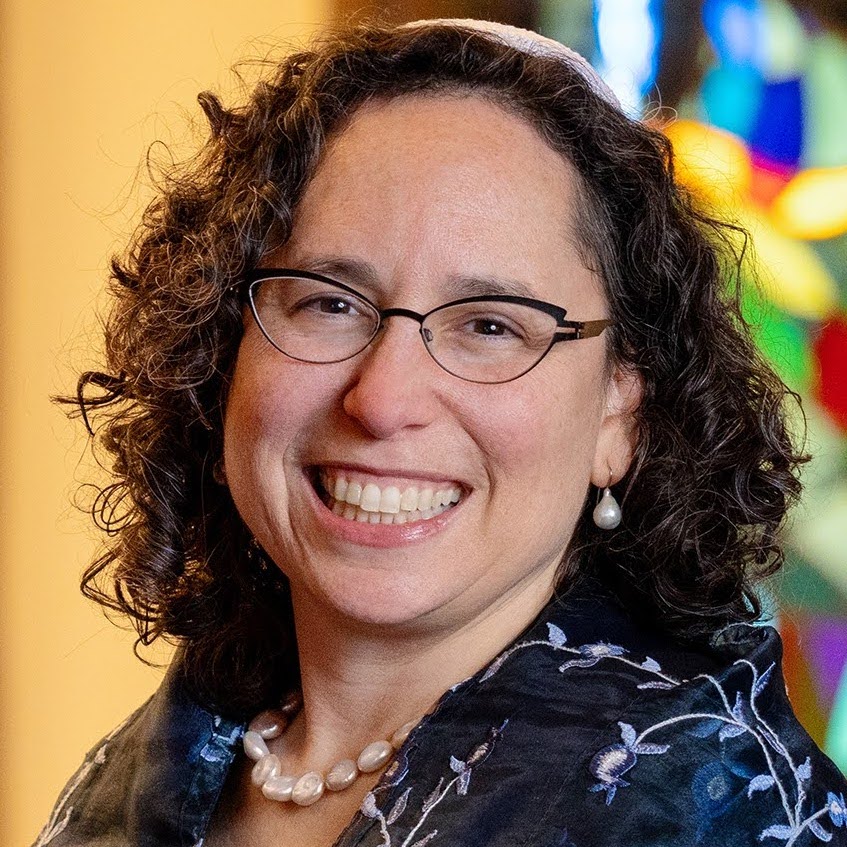
Sermon by Rabbi Julie Roth – East of Eden
If you haven’t seen it, I highly recommend the new Netflix TV show, ‘East of Eden’, inspired by the 1952 novel by John Steinbeck, set in the years between the Civil War and World War I. I admit, I binge-watched the seven episodes in two days. As a rabbi, I was captivated by this midrash on the central stories of this week’s parshah, B’reisheit, and the in-depth exploration of the key themes of the story of Cain and Abel. Each character in this multi-generational family struggles with moral inheritance and the question of whether they ultimately have a choice about who they will become.
The first episode, ‘Brothers’, focuses on the rivalry between Adam and Charles, two half-brothers who share a domineering and cruel father, who stokes the rivalry between them. In one poignant scene, echoing the fateful gifts Cain and Abel offer to God, Adam and Charles each present their father with a birthday gift. Adam’s gift, a stray dog he names ‘General Lee’ is embraced and adored, while Charles’ gift, an expensive, hand-carved pocket knife, is thoughtlessly set aside. The resentment and the hurt festers and grows and ultimately explodes when the father chooses Adam, the more gentle of the two brothers, to succeed him as a war hero, and Charles, the natural-born fighter, to stay at home and tend the family farm.
Though Charles, unlike Cain, does not kill his brother, in a final confrontation, in a dark alley, Charles almost beats his brother Adam to death, overcome by his jealousy and sense of rejection.
Much like the stories that will unfold in Genesis, the rivalry between the brothers continues into the next generation. Heart-broken when his wife runs away and abandons the family soon after his twins are born, Adam can’t seem to bear to even name his sons. A neighbor, Bible in hand, insists that the time has come to choose a name. Joking at first about giving them the names Cain and Abel, the boys are eventually named Cal (short for Caleb) and Aron. I have to admit, I didn’t notice the alliteration until it was pointed out in Kveller article. Cal, like Cain, has a streak of evil in him, while Aron, like Abel is idealized as pure and innocent. Adam, their father, is home but completely unengaged in their lives, perhaps picking up on the complete absence of Adam and Eve in the Cain and Abel narrative. As a result, the boys are predominantly raised by a hired cook named Lee, a Chinese-American immigrant whose love for philosophy and the meaning of one single Hebrew word will soon become the lynchpin of the story.
Let us return for a moment to our Biblical story of Cain and Abel. Remember, “Abel became a keeper of sheep, while Cain became a tiller of the soil.” They each brought a gift to God. “Cain brought an offering…from the fruit of the soil” while Abel, “for his part, brought the choices of the firstlings of his flock.” Like the story ‘East of Eden’, God “paid heed to Abel”, but at first ignored Cain. When Cain became “much distressed and his face fell”, God gave him some critical advice. Pay close attention to what God said to Cain, especially the last line. “And the Lord says to Cain,
“Why are you distressed,
And why is your face fallen?
Surely, if you do right,
There is uplift.
But if you do not do right
Sin couches at the door;
Its urge is toward you,
Yet you can be its master.”
Admittedly, I never paid that much attention to the Hebrew of that last verse before watching East of Eden.
That’s probably because I never noticed a discrepancy between the translation of this key verse in the King James Bible, the American Standard Version, and the Jewish Publication Society, which is the translation in our Etz Hayyim Humash. Published in 1611, and commissioned by King James of England, the King James Version translates, v’atah timshol bo, as a promise, “thou shalt rule over sin.” The more modern Christian translation of the Bible, the American Standard Version, renders these words a command, “do thou rule over sin.”
In East of Eden, Lee, the family’s Chinese-American cook and the most scholarly person in the entire story, was so puzzled by this discrepancy that he and four elderly men decided to learn Hebrew from scratch and studied this clause with a rabbi for two years to settle once and for all its true meaning. And John Steinbeck, in real life, consulted Rabbi Louis Ginzburg, a professor at the Jewish Theological Seminary, about the meaning of this word through a series of letters. Some attribute Steinbeck’s mistransliteration of the word ‘timshol’ as ‘timshel’ to Professor Ginzburg’s Litvak accent.
Back to East of Eden: “Don’t you see?” [Lee] continues. “The American Standard translation orders men to triumph over sin, and you can call sin ignorance.
The King James translation makes a promise in ‘Thou shalt,’ meaning that men will surely triumph over sin. But the Hebrew word, the word timshel—’Thou mayest’—that gives a choice. It might be the most important word in the world. That says the way is open. That throws it right back on a man. For if ‘Thou mayest’—it is also true that ‘Thou mayest not.’ Don’t you see?”
Rabbi Ginzburg explained to Steinbeck that the word, timshol, is in the future tense and its meaning is debated. Though I didn’t have access to their full correspondence, I was able to look up the writings of our rabbinic commentators. Rashi, quotes the Talmud and says it means, “if you desire to, you can gain victory over sin.” Sforno elaborates and says, “it is within your power to overcome the evil urge thanks to being created b’tzelem elohim, in the divine image, which you have been provided since birth.” Rabbi Shimon ben Eliezar uses a metaphor to explain the choice embedded in the word, timshol. “The evil inclination is akin to a piece of iron that is cast into the fire. As long as it is in the fire, one can make of it whatever vessel one wishes.”
In the story, East of Eden, Cal blames himself when his brother Aron is killed in battle because his cruel action, made in a moment of anger and jealousy, seems to lead his brother to enlist as a soldier during World War I. The importance of the translation of timshol impacts not only Cal’s understanding of his past actions, but also his choices for his future. If timshol is translated as ‘thou mayest rule over’, the young man who knowingly did a cruel thing in the past, can still change his actions in the future. Though the novel leaves the question of whether Cal will make better choices the next time he is confronted with the temptation of sin unanswered, the key lesson of the story is that his fate is not inevitable, his future is not determined by the past. Rather, the choice is his.
The medieval Torah commentator Ibn Ezra, offers a powerful understanding of the implications of translating timshol as choice. Ibn Ezra believes that sin “longs to cleave to you at all times. Nevertheless, thou mayest rule over it if you so desire, for you may mend your ways and remove it from upon you.” According to Ibn Ezra, Cain has a choice not only before he kills his brother, but also afterwards. Ibn Ezra writes, “[God] taught [Cain] concerning teshuvah, that it lies within his power to return anytime he desires, and God will forgive him.”
The word timshol is in the future tense. This means that the future is unknown, and ultimately a choice, and that we have the power and the autonomy to choose good over evil. But even more powerfully, timshol means that even if we have made the wrong choices in the past, there is still a future that can be different from the past, a choice the next time we are confronted with sin, to choose blessing over curse, to choose life.
“Think,” writes Steinbeck, “of the glory of the choice! That makes a man a man. A cat has no choice, a bee must make honey. There’s no godliness there. … But this [thou mayest]—this is a ladder to climb to the stars … It cuts the feet from under weakness and cowardliness and laziness … The way is open, the choice is thrown onto Cain and all of humanity.”
As we start a new year and a new Torah reading cycle, let us hear the whisper of God’s words to Cain just outside the Garden of Eden, timshol, and remember, the choice is always ours to make.
Shabbat Shalom.
Other Sermons and Talks from the Bimah
See the blog category: Sermons & Talks
Video Archive
The archive of all Shomrei videos is available on our YouTube Channel at shomrei.org/video