
Winter Recipes
 Being stuck inside because of bad weather brings out the inner cook in me. I find myself really reading the New York Times recipes— though many of them are too fussy for my taste and call for too many ingredients— and food articles and searching my cookbook library for new twists on something familiar.
Since I’ve been ordering groceries from Shoprite for the last few months, I can easily coordinate my shopping list with what I plan for the next week. I find I have much less waste.
What follows are a few of the dishes I’ve cooked for cold weather. Don’t worry if you don’t have some of the minor ingredients. It’s easy to make substitutions for most ingredients as long as the texture or taste is similar.
My usual rule of thumb is to try to make a dish exactly as written the first time and then make changes to suit my family’s taste and my pantry’s supplies.
Soup is a tasty way to start a cold-weather meal, and vegetable-based soups are a good way to get nutrition from veggies and some hydration, too. Soups are also perfect for using up tired vegetables. The following soup can be a base for lots of different kinds of seasoning. Don’t be afraid of playing around with soups. They are very adaptable.
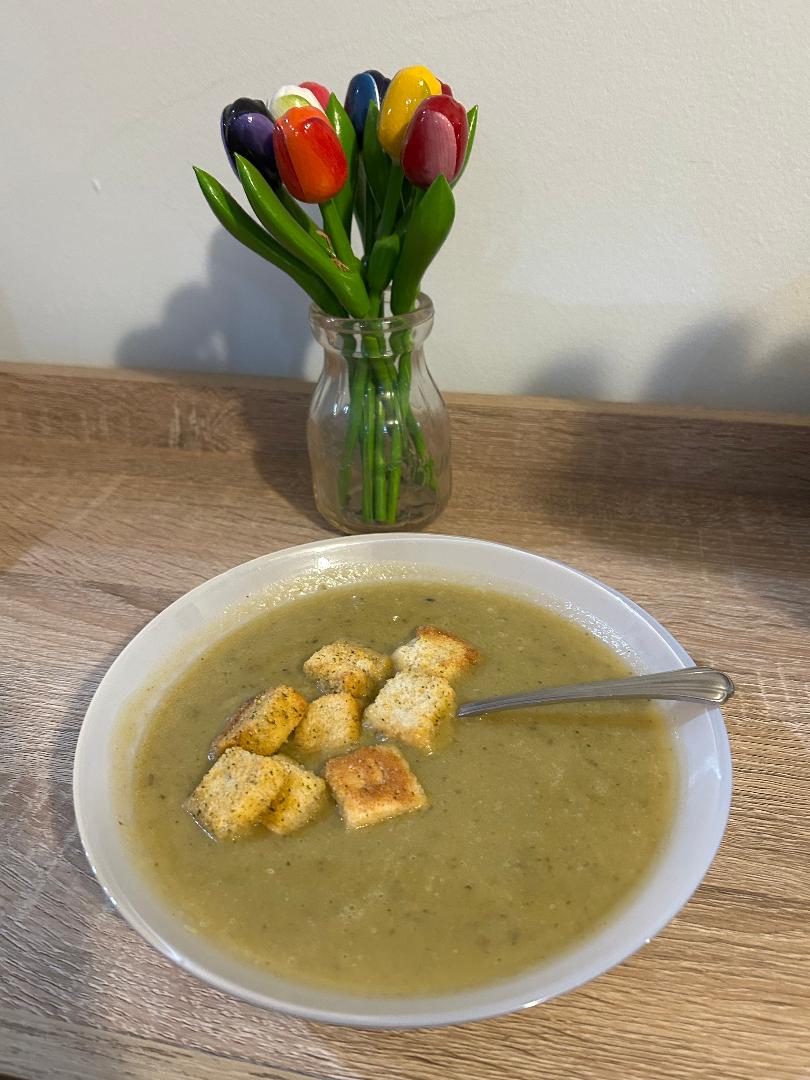
Broccoli and Potato Soup (New York Times) serves 4 generously
Ingredients
2 tablespoons olive oil, plus more for serving
1 small red or yellow onion, thinly sliced
Salt and pepper
1 pound baby potatoes, diced
2 teaspoons dried oregano
1 head of broccoli (about 1 1/4 pounds), trimmed and cut into bite-sized pieces
1 quart low-sodium vegetable broth
2 cups water
1 cup finely grated Parmesan
Directions
- Heat the oil in a large pot over medium-high until it shimmers. Add the onion, season lightly with salt, and cook, stirring occasionally until it starts to soften, about three minutes.
- Add the potatoes and oregano and cook, stirring occasionally for about 2 minutes.
- Stir in the broccoli, broth, and 2 cups of water. Season lightly with salt and pepper.
- Raise the heat to high. When the soup comes to a boil, adjust the heat to maintain a gentle boil. Cook stirring occasionally so that nothing sticks to the bottom of the pot, until the potatoes are soft and mashable, about 20 minutes.
- Lower the heat to medium-low (or turn it off completely for safety) and either mash the ingredients together with a wooden spoon, a fork, or a potato masher or use an immersion blender, leaving a few small chinks.
- Turn the heat back on and cook for another 2 minutes or so.
- Add most of the cheese stirring well so it doesn’t clump or get stringy. Reserve some for garnish. Taste for salt if needed.
- Divide among bowls and top with remaining cheese, if desired, a few grinds of pepper, and a drizzle of olive oil.
Notes
- Thawed and drained frozen chopped broccoli can be used instead of fresh.
- If the soup needs some seasoning, try chili flakes, garlic, a slug of soy sauce, or hearty squeeze of lemon juice.
- Croutons work well in this soup, giving it a nice crunch and extra seasoning.
- You might try substituting nutritional yeast for the Parmesan.
- This soup may thicken as it cools. If the soup is too thick, add a little extra water.
Kugels are classic Jewish side dishes. This kugel is very simple to make, and you’d never guess what the secret ingredient is.
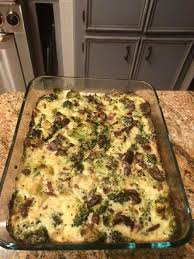 Broccoli Kugel serves 8
Ingredients
1 (2-pound) bag frozen chopped broccoli, thawed and drained
1 cup light mayonnaise
4 eggs
1 1/2 teaspoons kosher salt
1/4 teaspoon coarse black pepper
1 pinch cayenne pepper
Directions
1. Preheat oven to 375 degrees.
2. Liberally coat a 9-inch baking dish with nonstick cooking spray.
3. Place eggs in a large bowl and lightly beat with a fork. Add broccoli, mayonnaise, salt, black, and cayenne peppers. Mix well.
4. Pour mixture into prepared dish.
5. Bake at 375 degrees for 1 hour and 15 minutes or until set with golden edges.
Notes
1. Double recipe for 9 x 13 pan. Broccoli does not have to be doubled.
2. Use onion soup mix for more aggressive seasoning but use less added salt.
3. Top with fried onions.
4. Top with Parmesan (no longer parve).
5. Season with chili flakes and/or garlic.
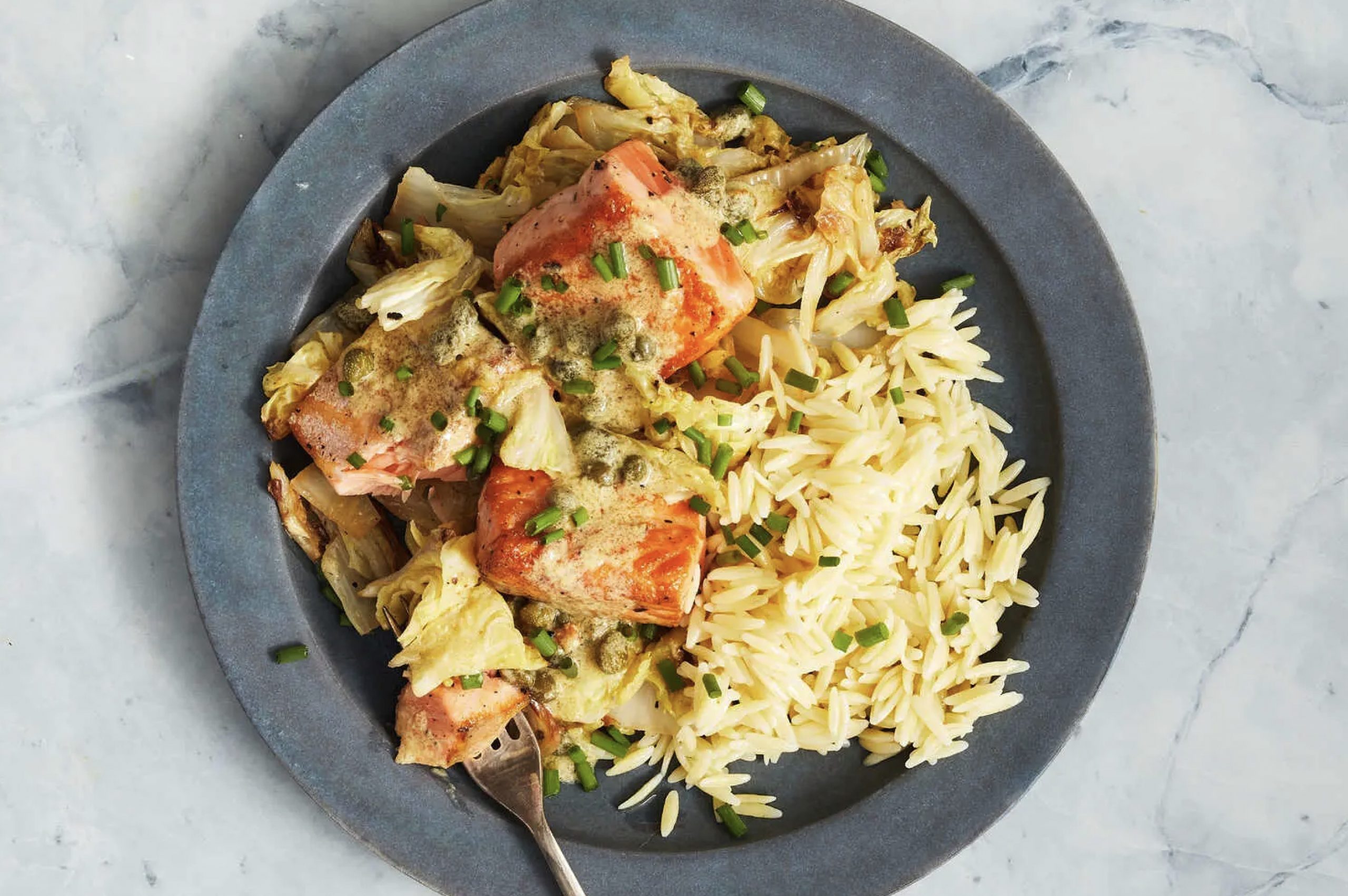
Salmon is always available, and most people like salmon. This entree can be seasoned more aggressively by using more lemon juice and mustard. It’s simple enough for a family meal but elegant enough for company and looks lovely arranged on an oval platter with a garnish of chopped parsley or chives.
Salmon with Mustard Piccata Sauce Serves 4
Ingredients
4 tablespoons unsalted butter, divided
1 garlic clove, minced
1 1/4 pounds napa cabbage, coarsely chopped into 1 1/2-2 inch pieces (about 6 cups)
salt and pepper
1 1/2 pounds skinless center-cut salmon fillet, cut into 1-11/2 inch pieces
1 tablespoon extra virgin olive oil
2 tablespoons hot English mustard (or Dijon, or taste)
2 tablespoons capers
1 tablespoon lemon juice
1 tablespoon chopped chives, plus more for garnish
orzo or basmati rice for serving
Directions
- Melt 2 tablespoons butter over medium heat in a 12-inch nonstick skillet with a lid. Add garlic; stir until fragrant, about 30 seconds.
- Add cabbage, season with salt and pepper; stir to coat.
- Spread cabbage in an even layer; increase heat to medium-high and cook until golden in spots, about 3 minutes. Stir, then cook, undisturbed for another 2 minutes.
- Season salmon with salt and pepper, drizzle with oil and toss to evenly coat.
- Arrange fish on top of cabbage in a single layer. Cover and reduce heat to low. Cook until cabbage is golden and tender and fish is cooked ,about 5-7 minutes. Test for doneness.
- Divide cabbage and fish among 4 plates or arrange on one platter.
- Add 1/2 cup of water to the skillet and bring to a simmer over medium, stirring to incorporate any brown bits from the bottom of the pan. Cook until liquid is slightly reduced, about 2 minutes.
- Add mustard, capers, lemon juice, and the remaining 2 tablespoons butter and stir until smooth and slightly thickened. Stir in chives.
- Spoon sauce over fish and cabbage and top with more chives.
- Serve with rice or orzo on the side.
Notes
- Substitute other sturdy leafy vegetables for napa such as bok choy or even spinach.
- Use scallions instead of chives.
- Double the sauce.
- Substitute baked or fried tofu for salmon. Use vegan butter.
Continuing on the fish theme, this sheet-pan recipe is another dish using dark green leafy vegetables and beans for a healthy, hearty winter dish.
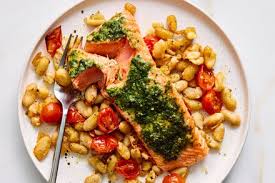 Pesto with Fish with Greens and Beans (serves 4)
Ingredients
1/3 cup pesto or more to taste
1 1/2 tablespoons olive oil
1 lemon, plus lemon wedges to serve
1 bunch collard greens (about 1/2 pound, sliced into 1/2-inch ribbons, thick stems removed)
1 (14-ounce ) can cannellini beans, drained and liquid reserved
4 (5-7 ounce) white fish fillets such as cod, haddock, or hake
1/2 teaspoon fine sea salt, plus more for seasoning
For bread crumb topping
1/3 cup panko bread crumbs
2 garlic cloves, grated or minced
1 1/2 tablespoons olive oil
1/2 teaspoon fine sea salt
Directions
- Heat oven to 400 degrees.
- Finely grate the zest of the lemon into a medium bowl (save the lemon). Add the pesto and olive oil. Stir to combine.
- In a large bowl, mix the greens, drained beans, half the pesto mixture, 1/4 cup reserved bean liquid, and salt. Cut lemon in half and squeeze 2 tablespoons of juice into the bowl. Mix well.
- Cover a large sheet pan with foil or parchment paper. Spread the beans, greens, pesto mixture in an even layer.
- Pat the fish dry and season lightly with salt on both sides and coat the fillets with the remaining pesto mixture. Arrange the fillets on top of the vegetable mixture.
- Prepare the bread crumbs: In a small bowl, mix together panko, garlic, olive oil, and salt. Coat the top of the fillets with bread crumbs, pressing down so that they stick to the fish.
- Bake until the fish is cooked through and flakes easily, the greens are tender, and the panko topping is golden, 12-15 minutes, depending on the thickness of the fish.
- Serve with lemon wedges.
Notes
- Substitute other greens or cabbage for collards.
- Add another can of beans , if desired.
2. Use garlic paste.
3. Put under the broiler for the last minute or two to brown the crumb topping.
4. Double the pesto mixture if you want a more pronounced taste.
And remember, one of the keys to a multi-step recipe is to have everything prepared and ready to go. In classic cooking, that’s called mis en place. It really saves time and ensures that you either have everything on hand or can anticipate substitutes.
B’TAYAVON!


Nice recipes, Aileen. Thank you 😊
These look so good, Aileen. And thank you for adding your notes!