Anne Frank’s Tree
 Just a few days ago we marked International Holocaust Remembrance Day. On this day, January 27 in 1945, Auschwitz-Birkenau, the largest concentration and death camp in World War II, was liberated by the Allied Forces. Over 1,000,000 people were killed there.
On February 2 this year, we celebrated Tu B’Shevat, the New Year of the Trees.
As I thought about these two days, one commemorating destruction and the other celebrating life, Anne Frank’s famous horse chestnut tree came to mind. In the courtyard of the building where Anne and her family hid, the large, old tree had flourished for well over 100 years.
Anne mentioned the tree several times in her diary. The tree provided a touch of beauty, but it also provided hope.
Unfortunately, as the tree aged, it was weakened by a fungus. Attempts were made to treat the tree and shore it up, but a severe storm in 2010 toppled the 170-year-old tree. In the succeeding years, nuts and grafts saved from the tree have been germinated and planted throughout the world in institutions that promote freedom and social justice.
Saplings have been planted in Raritan Valley Community College and Stockton University in New Jersey. There are trees at the United States Capitol, the United Nations in New York, the Museum of Jewish Heritage in lower Manhattan and the British Library in London. There are also trees in many places around the world providing beauty, memory and hope.
Related books:
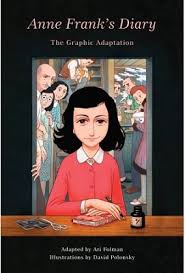
Frank, Anne. Numerous editions of the diary and biographies at every reading and interest level, from picture book to newly independent reader to graphic format, and fully annotated.
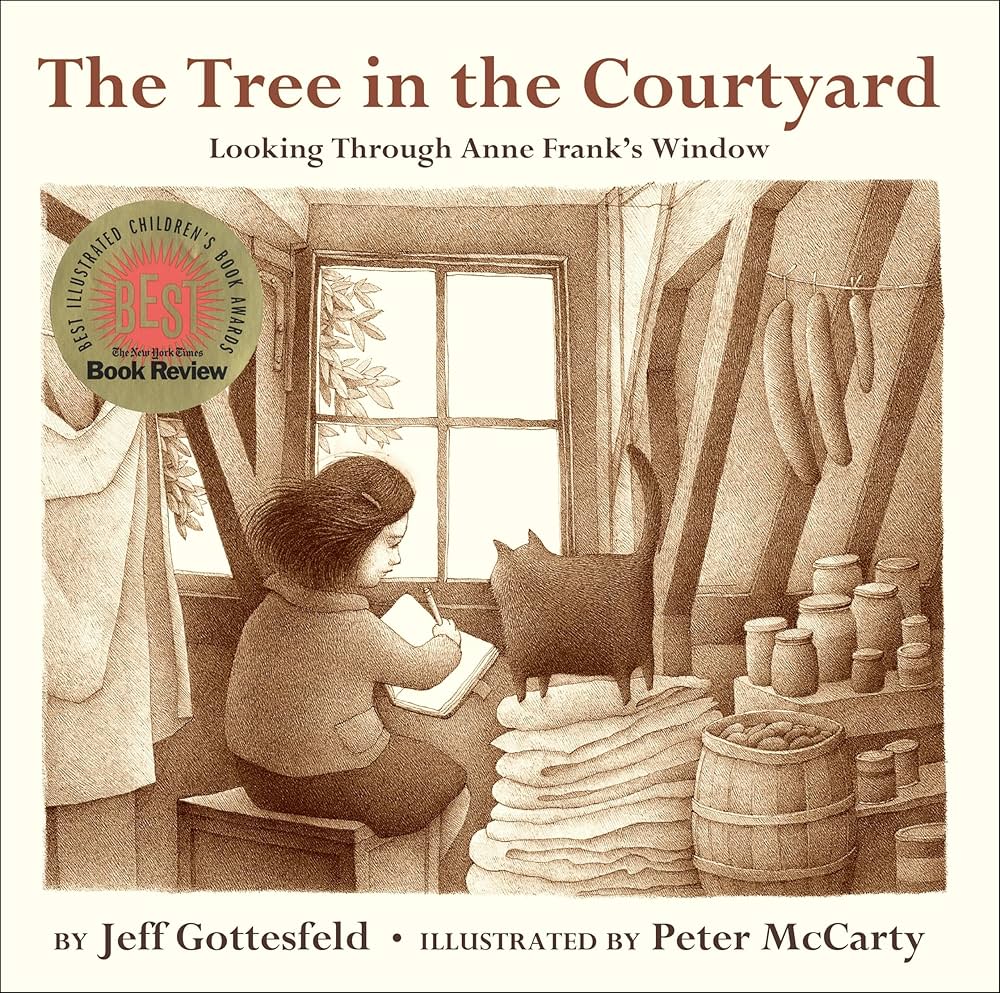
Gottesfeld, Jeff. The Tree in the Courtyard: Looking Through Anne Frank’s Window.
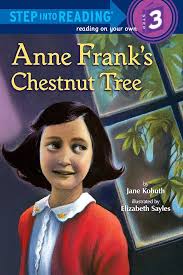
Kohuth, Jane. Anne Frank’s Chestnut Tree.
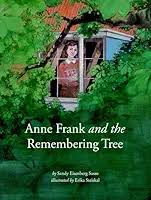
Sasso, Sandy Eisenberg. Anne Frank and the Remembering Tree.