Sermon: Vayakhel-Pekudei
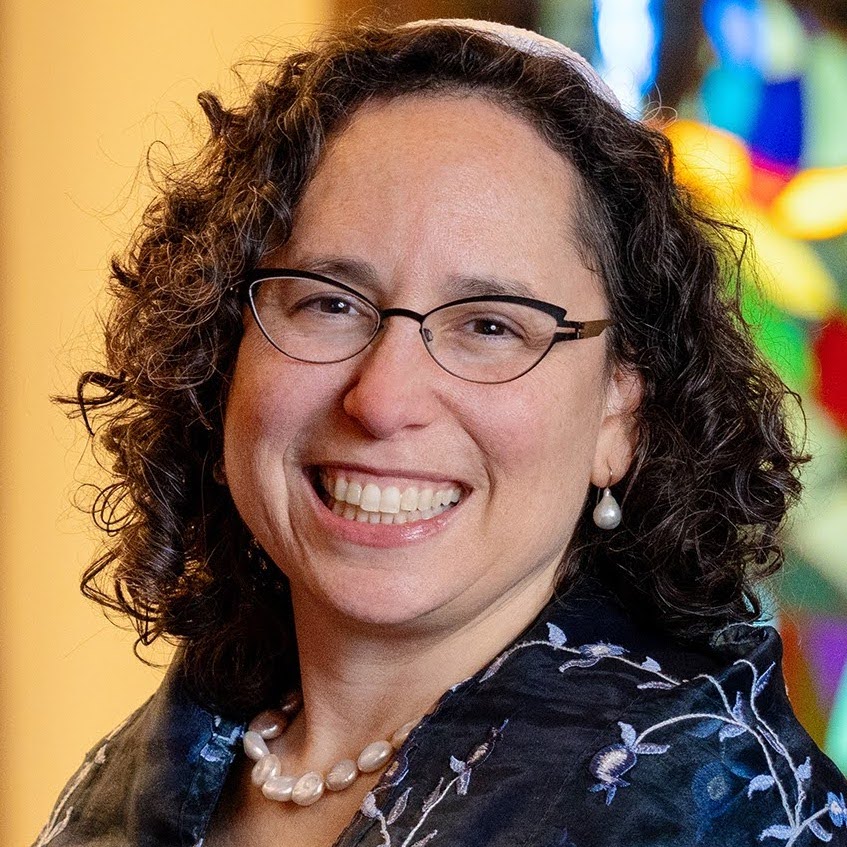
Sermon by Rabbi Julie Roth: Building in the Face of Antisemitism
My mind goes blank when I start to think about what happened on Thursday in Bloomfield, Michigan. I know it’s a defense mechanism. I think for a moment, a car rammed into Temple Israel in Bloomfield, Michigan and the building caught on fire. And then I quickly try to think of something else, anything else.
Gunfire ensued. 100 children in the preschool. Snippets of information. Images flash through my mind. I look up the website to see if that’s the synagogue where Justus’ classmate from HUC is the rabbi. And for a moment I’m distracted from the unfolding terror, noticing at the same time that not only is Mark at a different synagogue, but as I count them, Temple Israel has seven rabbis and a cantor.
I feel jealous for a moment that they have a such a big clergy team and then I think well they must be a big prominent, synagogue. And I pretend for a moment that this means that we’re safe at Shomrei, after all, we only have one rabbi, and then I think about the small synagogues in Texas or Pittsburgh. And my mind goes blank again.
* * *
We finished a book of the Torah today. Hazak, hazak, v’nitchazek. And the ending of the book of Exodus is somewhat surprising. We began with a Pharoah who did not know Jospeh, who did not remember how one of our own saved the entire region from famine. We begin with the story of those who fear us because of an outsized theory of our numbers, of our power, of our influence, of our danger. And our ancestors descend into slavery. Slavery descends into genocide, but the Hebrew slavewomen are strong, and quick to give birth. And one mother hides her child in a basket on the Nile, floating the hope of future, safety, redemption.
And then, just as we will recall at our Passover seders in a few weeks, the story continues with crying out, and speaking up, and plagues and wonders. This is the part of the story our pre-K class has been enacting all week, each day with a different hat, with a different plague, finding me in my office, in the social hall, in the hallways, attacking me with blood, frogs and lice. Laughing, pretending, k’ilu, as if we ourselves left Egypt. One might think the ten plagues or the splitting of the sea, the crossing over onto dry land, the dancing with the timbrels would be the climax of this story, the culmination of this book of the Torah.
Or maybe, the height of this narrative is found on Mount Sinai, if not the first, time, then the second time Moses ascends to encounter God and to bring us a blueprint for living inscribed in stone on two tablets. The forgiveness, after the golden calf, the quieter second chance after the blazing mountain and the shofar blasts that only got louder and louder. Wouldn’t that be the dramatic and memorable ending of the Book of Exodus?
* * *
I didn’t speak about the stabbing and shooting attack on Yom Kippur at a synagogue in Manchester, England that killed two and wounded four because I didn’t want to distract from the sanctity of the day, from the spiritual work we focus on only one day of the year. And I didn’t speak about the Hanukkah attack at the Bondi beach in Sydney, Australia because I didn’t want to be alarming, because I wanted us to feel only joy on Hanukkah, because Australia has been worse than here for a long time. And I didn’t want to speak about Bloomfield, Michigan either because it’s hard to know what to say, what to think, what to do. But the frequency here in the United States and around the world, from England, to Canada, to Australia, to Azerbaijan, to Belgum and Amsterdam are a pattern that cannot be ignored, emotionally and psychologically, even if we try. A chilling headline in Times of Israel reads, “Michigan shul is at least the 8th Diaspora synagogue targeted so far this month.
* * *
I must admit, when I recall the details and the repetition of today’s double parshah, Vayakheil Pekudei, riveting is not the first word that comes to mind. The mishkan, the holy sanctuary where God’s presence dwelled among us, must have been magnificent. The woven tapestries, the golden Menorah, the cherubs, the pomegranate bells, the Ark of the Covenant. And yet, after the Exodus, after the miracles and wonders, after Sinai, after the transformation from slavery to freedom, this seems like an anti-climactic way to end the Book of Exodus.
I was always taught that the mishkan, was an anecdote to the golden calf. If our ancestors couldn’t handle God in the abstract, if they needed something concrete and physical, God would accommodate by having them build a structure, a physical place, lest they be tempted again to build an idol. But this explanation missed the forest for the trees. If we only look back to last week’s parshah and to the very beginning of this saga, we miss a deeper message.
The culmination of redemption is not freedom, it’s not even the gift of revelation. The culmination of redemption is building. The Book of Exodus is teaching us that the opposite of oppression is not freedom, but contribution, voluntary contribution to a collective project, to building something sacred together, a sanctuary, a holy place of gathering for worship and connection.
* * *
I am disturbed by three conversations I had this week with parents of young kids at Shomrei.
The first person recounted an incident on Bloomfield Avenue in Montclair. She was sitting outside a restaurant with a friend, when a stranger came up to her and asked if she was Israeli. It turns out the person had been listening to their conversation. The stranger said, “So you are committing genocide. Do you support the murder of innocent children and babies?” And if that wasn’t jarring enough, the stranger continued, “Do you know who was behind 911?”
In another conversation, I was planning for an upcoming baby naming. We had worked out the details, the Hebrew name and its meaning, the loved ones the baby was being named after, the tallit for the ceremony. And the baby with the bow in her hair was cooperative, so I asked one more question. Tell me, what does it mean to you to enter your children into the covenant of the Jewish people? And the mother replied, I’m scared. I thought we were going to talk about passing on traditions and celebrating Shabbat and holidays, but instead we talked about fear and safety.
And then last night, at Shabbat dinner after singing ‘there’s a dinosaur knocking at my door’ and giggling about the dinosaur being confused and drinking the candles, and eating the wine, and lighting the challah, a parent made an off-hand comment to me. His wife had been out with a group of friends from business school earlier that week. And this group of Jewish friends asked her why she ever converted to Judaism. And he said to me, rabbi how could they say that. Yes, things are scary right now, but that’s not what Judaism is about.
* * *
One of the mistakes we sometimes make is getting caught in the wrong details. Yes the gold that was used to make the mishkan, the sanctuary totaled “29 talents and 730 shekels by the sanctuary weight.” And even though that was literally a ton of gold – more than 2,000 pounds – these are not the important details. Yes, the fourth row of the the breastpiece worn by the High Priest had a lapis lazuli stone and the sockets and the planks and the bars and the erecting posts were all assembled correctly. But these were the details that mattered: their hearts were moved to bring gifts, everyone contributed. The people brought their dolphin skins and their skills, the building was created by people who excelled in ability and whose spirit moved them. Those tapestries of blue, and purple, and crimson thread were woven and spun by the women with their own hands. This magnificent sanctuary was built by the people, through contributions of time and money, through their own efforts, working together to manifest a vision, a plan, that they all believed in. And their efforts were “more than enough for all the tasks to be done.”
There are other details not to be missed because the mishkan was not only magnificent for its beauty and craftsmanship, but also for its resilience and the fortitidue. The laver, the ritual water basin, was made from copper and this copper was taken from the mirrors of the women. These were the very same mirrors used by the women who were enslaved, whose children were endangered, and yet they beautified themselves and seduced their husbands, and gave birth to the next generation. These mirrors were not for vanity but for spiritual resistance.
And inside that ark made of acacia wood, two cubits long, one cubit wide, and overlaid with gold, our ancestors carried the Ten Commandments. There were two sets of tablets, one broken, and one whole, representing not only second chances and forgiveness after the incident of the golden calf, but also a reality we have carried throughout our history. This covenant is precious and whole, it is life affirming and eternal, but it is also accompanied by trauma and pain, by heaviness and brokeness. And we carry on that covenant, in our own sanctuary, not because it is only full of meaning and joy, but even though it also contains pain and suffering.
* * *
I first read about the attack on the synagogue in Bloomfield, Michigan in an email chain from the security committee at Shomrei. There was a reassurance from the Federation that there were no credible threats in our area and that the security measures we already had in place were sufficient. And as the news unfolded, there was the realization that the security measures in place in Bloomfield, not only the arm guards outside the building and the police responders, but also the teachers and the staff who were trained in emergency preparedness, allowed those children to go home. Thank God, those children went home to their parents.
Safety remains a top priority at Shomrei and we are in the process of setting up trainings for staff and congregants. If you have not yet been trained, or you have not reviewed the safety protocols this year, I urge you to make the time to attend a training the next time it is offered. And I ask you to give generously to help defray our security costs which are substantial, but even more so to give generously so we can fund all the precious things that make Shomrei so special. And if you don’t already do this, I ask you to thank our security guards every time you enter and leave the building because they are risking their lives to protect us.
And let us not forget that our ultimate goal is to build something sacred together. A place to teach our children. A place to gather in prayer, in grief, in celebration, in learning and in song. In the words of Rabbi Asher Gottsfeld Knight, we must “still insist on building lives of meaning and warmth and connection.” Like the women with the copper mirrors, like our ancestors who built the mishkan, we build as an act of resilience. “Real resilience”, continues Rabbi Knight, is “the kind that lets you be angry and grateful, frightened and defiant, exhausted and loving, all at the same time, and still come back the next day and build something beautiful.”
That’s the strength we sing about at the end of the Book of Exodus, not simply of freedom or revelation, but the strength of building something sacred together. Hazak, hazak, v’nitchazek
Other Sermons and Talks from the Bimah
See the blog category: Sermons & Talks
Video Archive
The archive of all Shomrei videos is available on our YouTube Channel at shomrei.org/video