
Why was this seder different from all other seders?
Some of you may remember when I wrote about celebrating the ninth night of Hanukkah to accommodate my family’s arrival in Montclair.
A nearly identical situation -but in reverse – occurred this Passover. My granddaughter came down from Canada where she is in college but had to go back before the official start of Passover, thus missing the seder. What’s a grandmother to do but be flexible?
So we celebrated Passover on the Shabbat before Passover and called it the crazy mixed-up seder. The table was filled with our Passover artifacts – a hand-embroidered matzah cover, Rebecca’s 40-year-old pillow from religious school (do children make Passover pillows anymore in religious school?), the good china and silver.
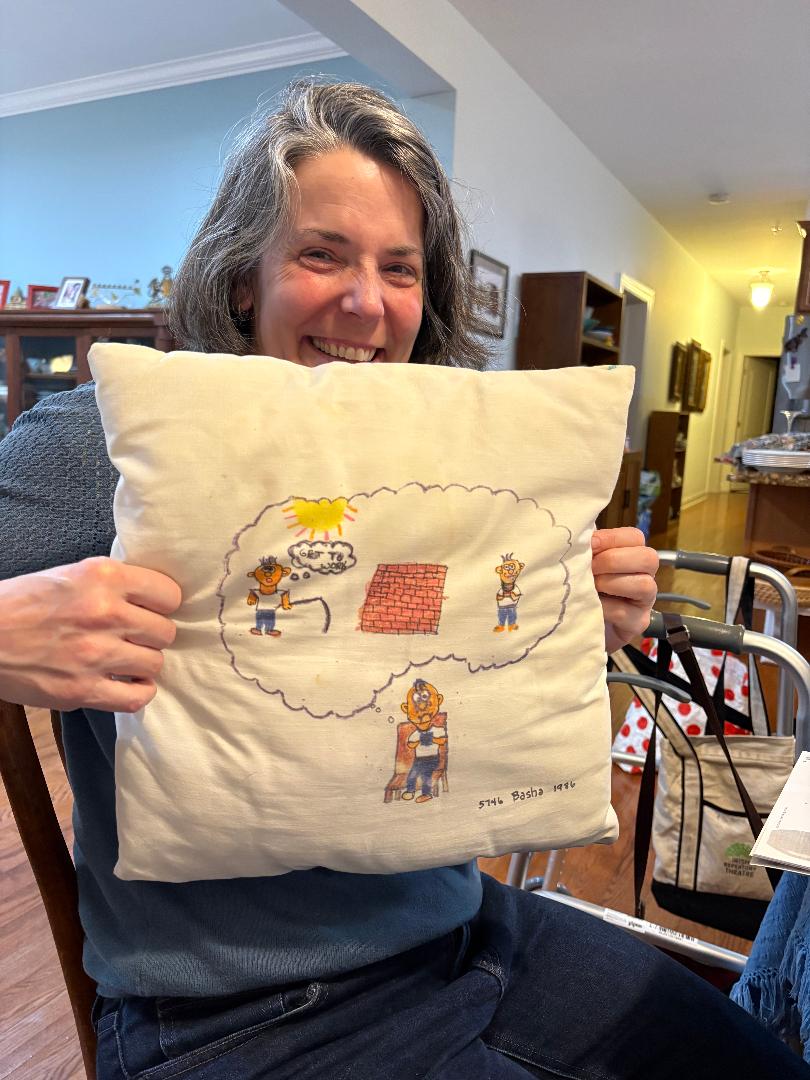
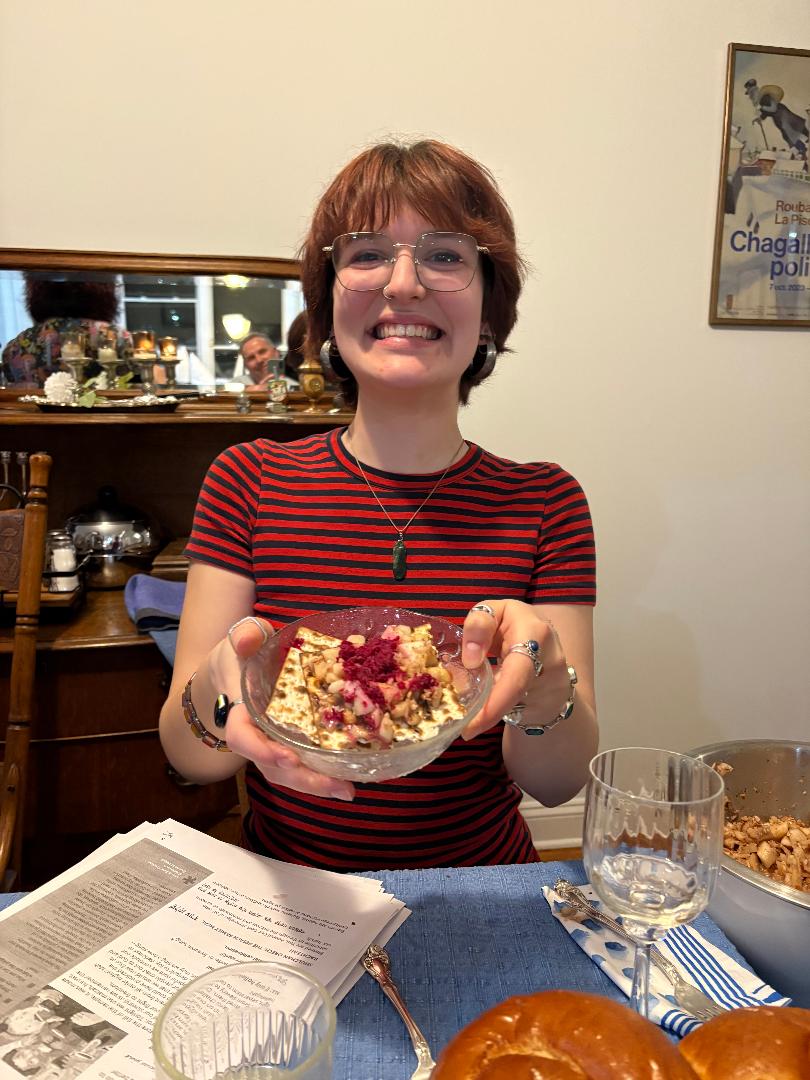
And because it wasn’t yet actually Passover, we had both unleavened and leavened bread because everyone wanted to taste Liv Bread’s challah.
Every year I try to give a new twist to our haggadah. This year I used the haggadah from the Jewish Grandparent’s Network (jewishgrandparentsnetwork.org) This website has lots of resources for grandparents and parents and also hosts some excellent webinars.
My family wants not too much talking and reciting, but I find if the readings are good, the questions and conversation follow. I promised a 15-minute seder but by the time we finished and embellished, it was more like 45 minutes. In my mind, that’s a good compromise.
The matzah balls tasted like my mother’s, the gefilte fish was -well- gefilte fish, the brisket was gobbled up, the chicken flew off the platter, and the matzah crack was addictive.
I tend to follow rules but Judaism is a practical religion: over the years we have changed to reflect culture and lifestyles while remaining true to the spirit of the law.
Like the ninth night of Hanukkah, our crazy mixed-up seder celebrated our family, recalled old memories and made new ones.
To celebrate the end of Passover, you might want to incorporate some of the traditions of the Mimouna holiday from Morocco. There’s delicious food and a spirit of community. For reference, read the charming children’s book by Allison Ofanansky, A Sweet Meeting on Mimouna Night.
In the upcoming weeks, look for lots of new books, including many for young readers on holidays and biographies of interesting people. All the awards are in and I’ll be purchasing the best of the best.
Finally, for your seder next year (or a later seder this weekend like a friend of mine is having) or any holiday, here are three recipes: easy, tasty brisket, an almost as easy chicken recipe and a luscious codfish dish. Quinoa goes nicely with all these entrees.
I like the following recipe because the ingredients are easy to find. Once it’s in the crockpot, it’s hands off and doesn’t take up oven space. It’s really tasty and also is easy to double. You can also make this brisket ahead of time and freeze.
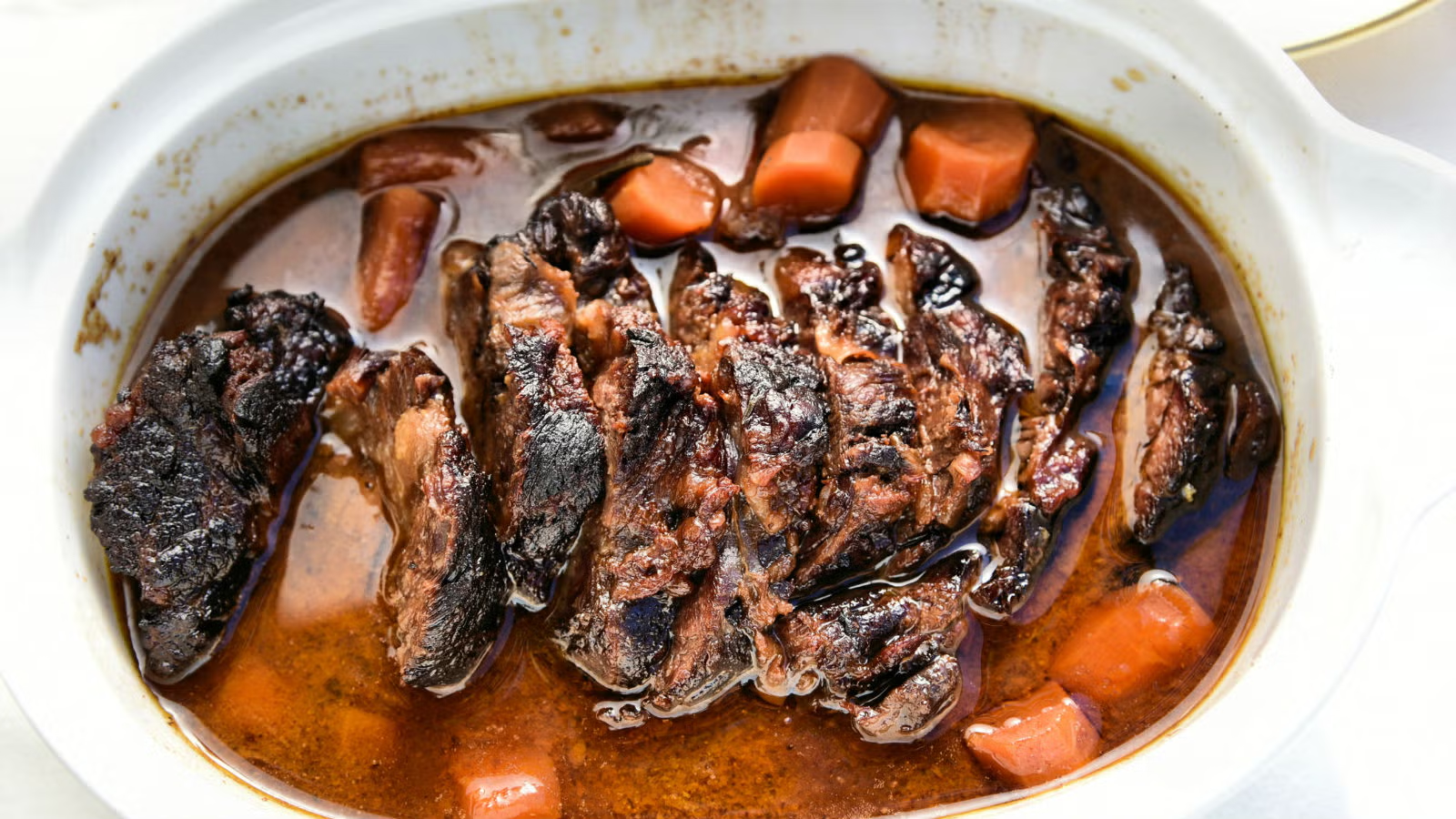 Crockpot Sweet and Sour Brisket (serves 4 or more depending on menu)
Ingredients
3 pounds of brisket, preferably 2nd cut
2 tablespoons neutral oil
2 large onions, diced
6 carrots, cut into matchsticks or small chunks
5 stalks of celery, chopped, plus leaves if you have them
6 cloves of garlic, chopped
1/4 cup dried cranberries
6 tablespoons cider vinegar
1/4 cup brown sugar
1/2 cup ketchup
3/4 cup stock
3/4 cup red wine
a handful of fresh herbs such as parsley and tarragon
Directions
- Heat a large skillet and add 1 Tbsp. oil. Sprinkle all sides of brisket with a couple of pinches of salt and pepper. Add brisket to pan and brown on both sides (about 5 minutes a side). When brown, add to crock pot
- In same skillet, add a little more oil and sauté onions, celery, carrots and garlic for 5-10 minutes until slightly softened
- In a measuring cup add wine, brown sugar, stock, ketchup and vinegar. Whisk and set aside.
- When vegetables are done, add cranberries and cook another minute. Pour in wine mixture; add herbs; bring to a boil.
- Carefully pour vegetables and sauce over brisket in crock pot; cook on high 4-6 hours or on low 8-10 hours. Temperature should be 195-205 degrees and a probe should slide easily into meat.
- The easiest way to slice is to cool completely and then reheat before serving. Don’t be tempted to slice hot meat. It will most likely shred rather than slice. Always slice across the grain.
- Serve with some of the vegetables and sauce. To thicken sauce, add a small amount of potato flakes and stir until slightly thickened.
This chicken recipe, adapted from one by Shannon Sarna, couldn’t be simpler and it’s good for all year round. Definitely add the chick peas if you eat kitniot during Passover. Spatchcocking, also called butterflying, a chicken is pretty simple. It basically involves removing the backbone and pressing the chicken flat. But a very sharp knife, a cleaver or good kitchen scissors are a necessity. If you have never prepared a chicken this way, do try it. There are numerous tutorials on the internet. The chicken cooks faster and more evenly and looks nice on the platter. Double the marinade for a large chicken or several thighs.
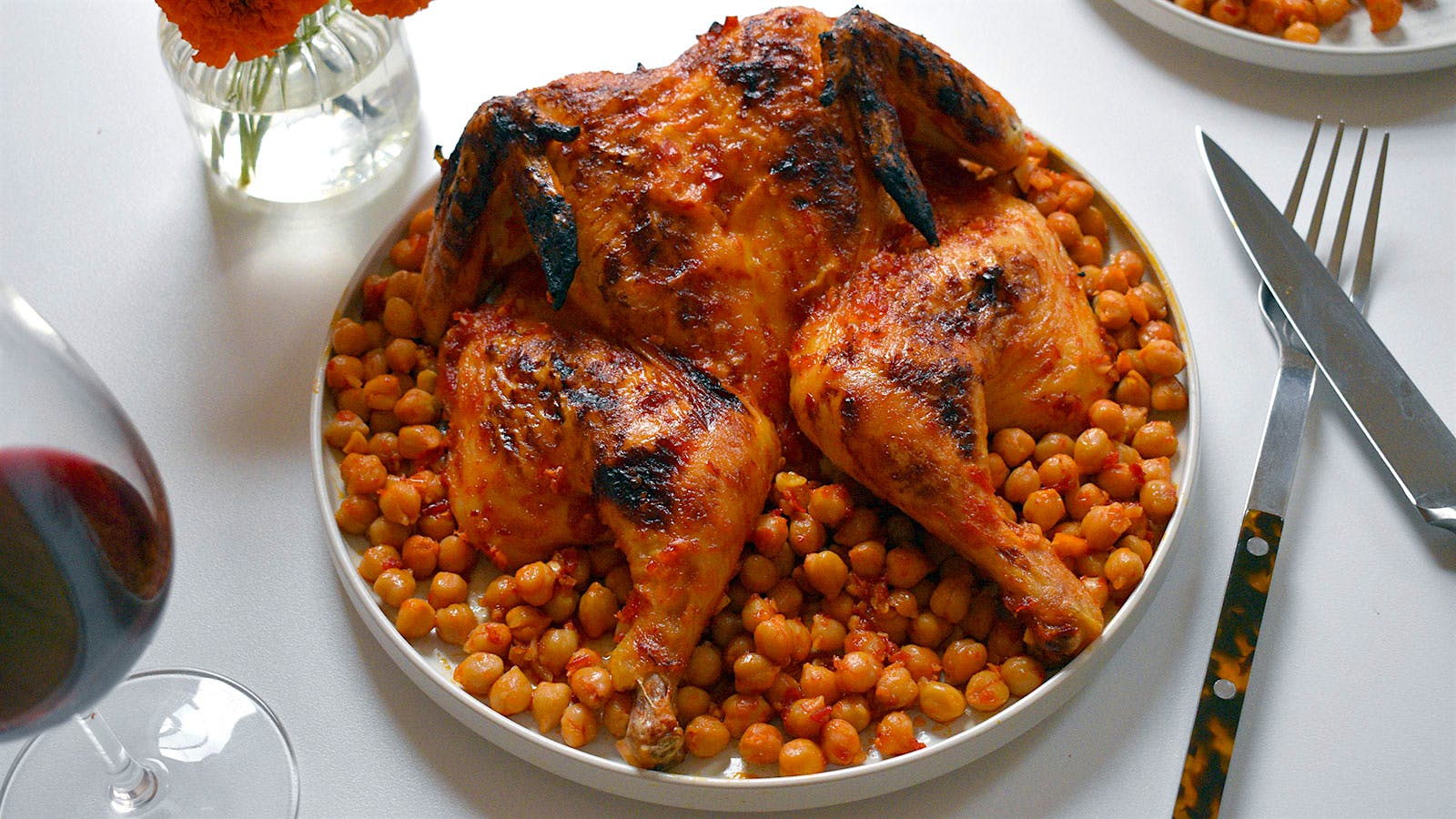 Harissa Honey Roast Chicken (serves 4-8 depending on size of chicken)
Ingredients
1 whole chicken, left whole or spatchcocked, or chicken thighs
2 Tablespoons honey
2 Tablespoons prepared harissa, either mild or spicy
zest and juice of one lemon
1 Tablespoon olive oil
1/4 teaspoon salt
1/4 teaspoon black pepper
can or two of chick peas, rinsed and drained
Directions
- Mix together honey, harissa, lemon zest and juice, olive oil, salt and pepper.
- Place chicken in a sealable heavy plastic bag. Add marinade. Massage chicken until fully coated. Add juiced lemon halves.
- Refrigerate for 1 hour up to 24 hours.
- Preheat oven to 450 degrees. (375 for thighs)
- Place chicken on a baking sheet or, if left whole, on an upright roaster.
- Cook for 55-60 minutes or until a meat thermometer reads 165 degrees. (35-40 minutes for thighs)
- If using chick peas, add to pan during the last 15 minutes of roasting.
- Cool slightly, cut into pieces, and serve.
Lastly, for a change of pace from the ubiquitous salmon, try this healthy recipe adapted from the New York Times for the pescatarians at your table.
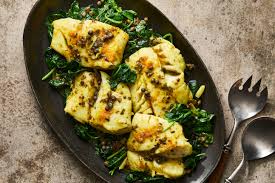 Cod with Caper-Orange Sauce (serves 4 as written)
Ingredients
4 Tablespoons olive oil, divided
2 garlic cloves, thinly sliced
Grated rind of an orange, plus 1/4 cup orange juice
1 1/2 teaspoons white vinegar
1 teaspoon honey
1/4 teaspoon ground turmeric
Fine sea salt
2 tablespoons non-pareil capers, chopped, plus whole capers for garnish
8 cups/11 ounces packed spinach leaves, or baby kale or chopped stemmed collard greens
4 (5-7 ounce) skinless cod fillets or other white fish or about 1.5 pounds
1 tablespoon butter
Directions
- Gather all ingredients.
- Make sauce: In a medium bowl, add 3 tablespoons olive oil, the garlic, orange zest, orange juice, vinegar, honey, turmeric, and 1/2 teaspoon salt. Whisk until emulsified. Then add chopped capers. Set aside.
- Heat remaining tablespoon of olive oil in a large frying pan over medium heat for 1-2 minutes. Add spinach and cook, tossing frequently until just wilted, 3-4 minutes and cover to keep warm.
- Pat fish dry and season lightly with salt.
- In same pan over medium heat, pour caper-orange sauce and bring to a simmer. Add butter and keep stirring until it has melted.
- Add cod and cook on one side 2-4 minutes, depending on thickness of fillets and continue cooking until fish is cooked through and flakes easily with a fork. Alternately, put cod on a sheet pan and roast at 400 degrees for about 12 minutes until cooked through and flakey.
- Drain spinach and spread on platter. Place fish on top and spoon warm sauce over fish. Garnish with extra capers and serve immediately.
Note: Double sauce if desired.


Nice article, Aileen. I’ve faced the “flexibility” issue myself these last couple of years and due to kids’ and grandkids’ travel schedules, decided to declare Passover a couple of days early. Since it was close to the real day, I switched over to Passover food and just struggled through a few extra days at the end. My grandmother’s Seders are a strong, visceral memory, and were the only Jewish celebration in my totally assimilated family, but they had a lifelong impact on me. Recreating that for the grandkids trumped all else:)